
Vimeo: https://vimeo.com/309674273
YouTube: https://youtu.be/pAcyaTRn_JM
Welcome to Kerbalism! I’m your host, Aubrey Goodman. Space is strange and foreign. There are lots of terms and concepts you probably haven’t heard before. We will use this terminology throughout the show, so let’s review the basics!
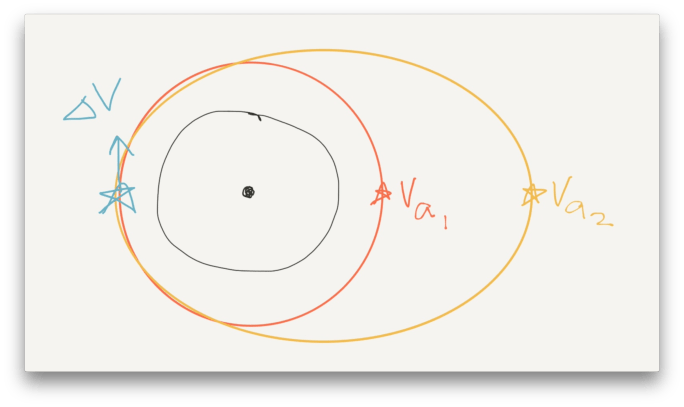
First, you blast off straight upward until your orbit reaches the desired altitude. The point with highest altitude along your orbit is called the apoapsis. Accelerating upward will raise your apoapsis. This is called a prograde burn; prograde means adding energy to the vehicle. When the craft reaches the apoapsis, we initiate a second maneuver (also a prograde burn) to accelerate sideways and increase our speed.
This raises the periapsis, or point with lowest altitude, up to the same altitude as the apoapsis, resulting in a circular orbit. In a circular orbit, the craft’s velocity doesn’t change very much. If we are orbiting a body outside of its atmosphere, there are no forces to accelerate the craft. This is referred to as a stable orbit.
If we wanted to land from a circular orbit, we would need to slow down, performing a retrograde burn. Retrograde means removing energy from the vehicle. Wherever we are along a circular orbit, burning retrograde will cause the apoapsis to settle at the craft’s location while the periapsis descends toward the planet’s surface on the opposite side of the orbit.
As the craft descends, its velocity increases. To be clear, we slow down now to speed up later at a lower altitude. If the periapsis is inside the atmosphere, we will begin to lose energy to drag forces. As we drop lower into the atmosphere, drag increases and vehicle speed decreases.
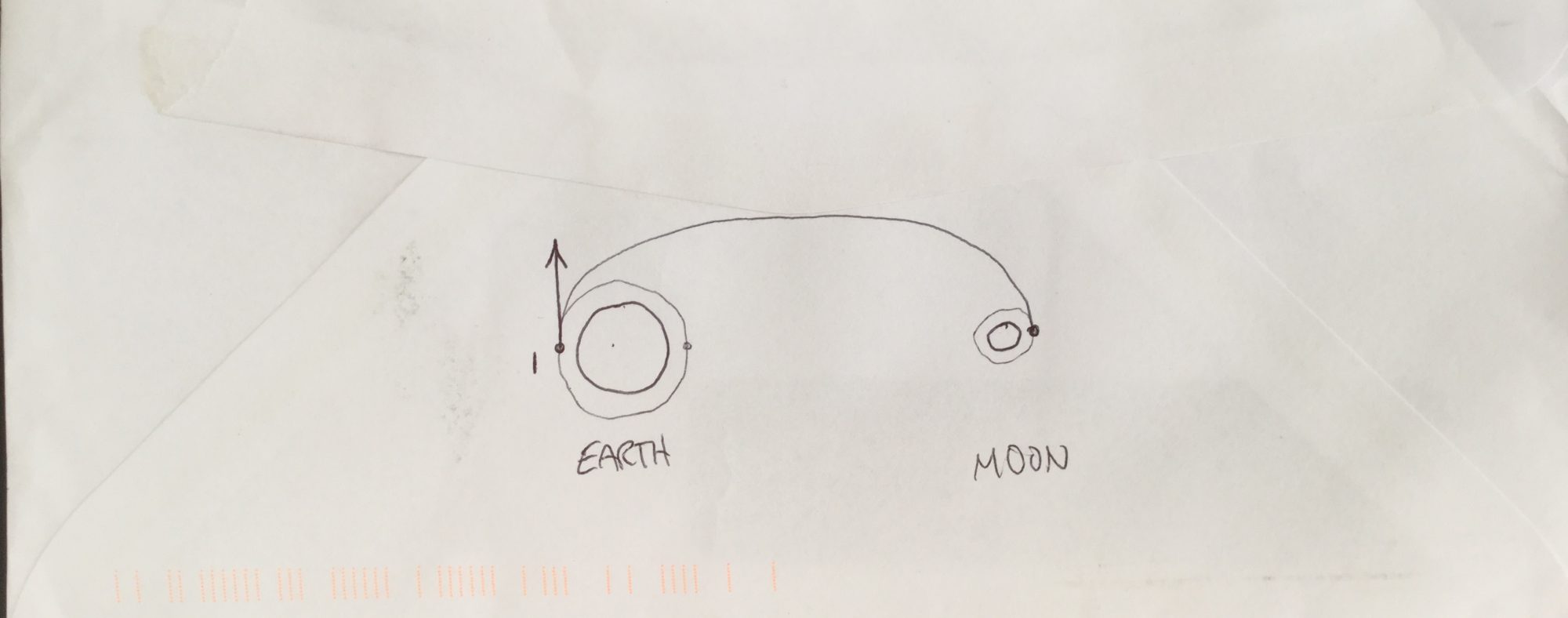
If instead we wanted to visit a moon orbiting the planet, we would need to burn prograde to speed up and raise the apoapsis to a higher altitude. This has the opposite effect as before. As the craft ascends, its velocity decreases. This time, we speed up now to slow down later at a higher altitude.
Each of these maneuvers is introducing a change in velocity, known as delta-v. As we compare different aspects of spacecraft design, we will be focused on optimizing delta-v. Many of the tools we use include automatic calculations for delta-v.
At this point, you might feel confused. In an elliptical orbit, the velocity changes along the path, so isn’t that the same as delta-v? Well, not exactly. As the craft moves around the ellipse, it speeds up toward the low point (or periapsis) and slows down toward the high point (or apoapsis). Each time the craft travels around the path, it returns to the periapsis with the same speed as it had the last time. Unless there is some other influence acting on the craft, it must obey the laws of physics and mathematics.
That’s all for this quick review. Stay tuned for satellite deployment!
And thanks for watching Kerbalism!
 Kerbalism