Mining Part 2, Mining Colony

Vimeo: https://vimeo.com/324381843

YouTube: https://youtu.be/1MprhkvcIaw

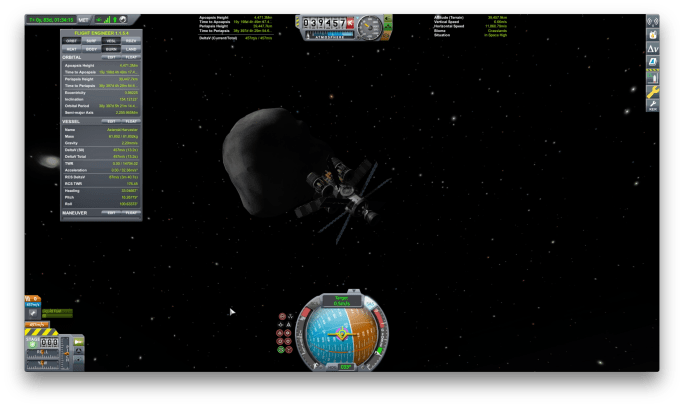
Welcome to Kerbalism! I’m your host, Aubrey Goodman. In this episode, we upgrade a manned surface station into a mining colony.

In our last episode, we landed a construction core on Minmus, ready to expand itself to support higher volume resource processing. Now, it’s time to grow our station into our first mining colony. We need a manned presence to enable ongoing mining operations, extracting resources from the surface.

With asteroids, there is a much smaller opportunity for resources. If the asteroid is only one thousand tons, we spend a lot of energy and time with finite benefit, equal to the mass of the asteroid. We must repeat this for each asteroid we wish to harvest. If the asteroids are small, we may use more resources capturing them than they yield from processing.

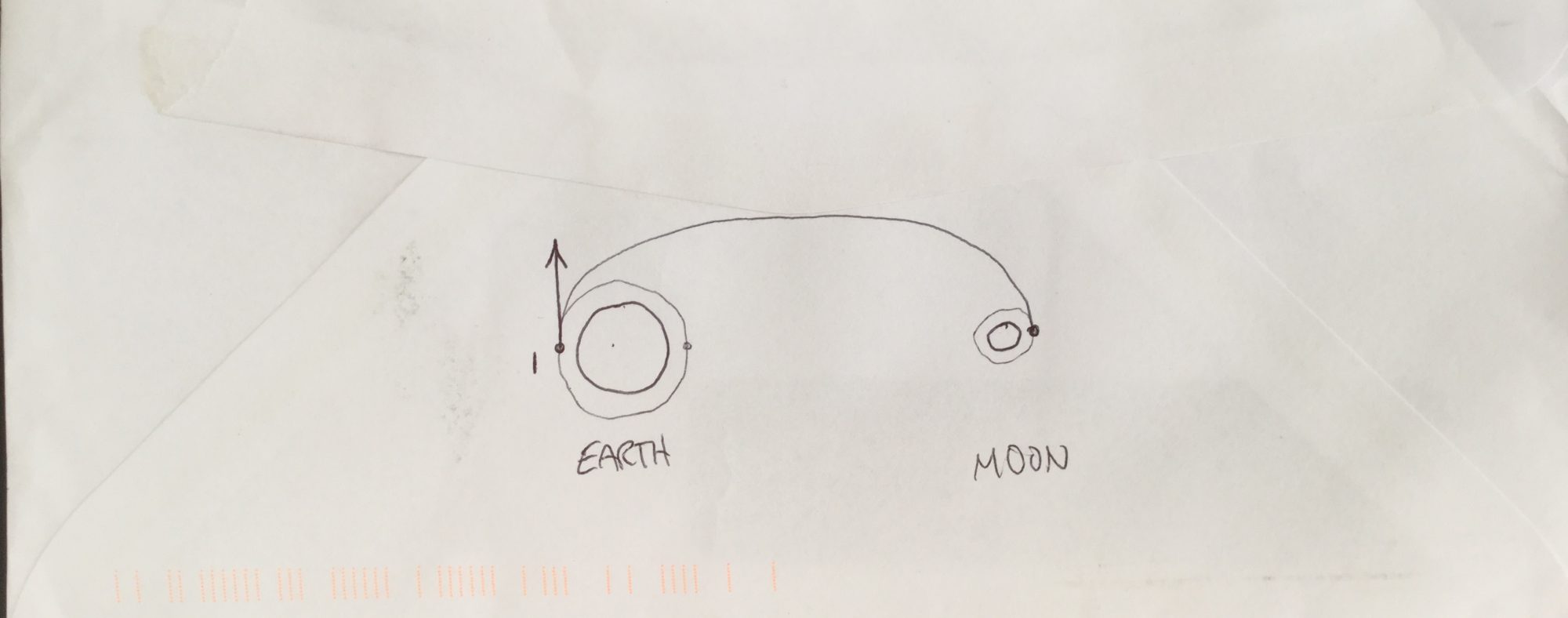
Moons are different. Resource abundance on the moon surface is effectively limitless, compared to the cache in the asteroid. Once we’re settled in at a good location, we can produce an arbitrary amount of fuel and send it back to orbit. We’ve chosen Minmus because its surface-to-orbit delta-v is very small. The cost of sending resources from the surface to orbit is much lower than Mun or Kerbin. From the surface of Minmus, we can launch into low planetary orbit for about one third the cost of launching from the planet directly.

The construction core is designed for expansion. The goal is to land the bare minimum mining gear and use it to build the rest on-site. Our station core has both radial and vertical expansion options. After we add processing components, we expand outward with more support struts with the same radial and vertical options. These become new expansion points and we repeat as needed.

Of course, expansion comes with its own challenges. Our first expansion of processing equipment was lost when it overheated and exploded. Fortunately, no other nearby parts were damaged. The expansion plan must include increased solar and thermal management. We also need to leave room for ships to land for refueling. These vessels will not be docking in the traditional sense. They simply land near the station and connect via fuel hose. The hoses are limited in length, so ships will need to land close to the hub and wait for colony crew to attach the hose before fuel transfer can begin. Once attached, the station can transfer stored fuel or make new fuel on-demand, until the ship’s reserves are full. Then, it’s simply a matter of detaching the fuel hose and blasting off to Minmus orbit to rendezvous with an orbital fuel station.

Using this technique, we can deliver fuel within our planetary system to support the needs of any ships traveling between the planet and its moons. As we expand to other planets, we create new mining colonies on moons as needed.

As always, thanks for watching Kerbalism!
Mining Part 1, Construction Core

Vimeo: https://vimeo.com/314334638

YouTube: https://youtu.be/HvigCivcMvg

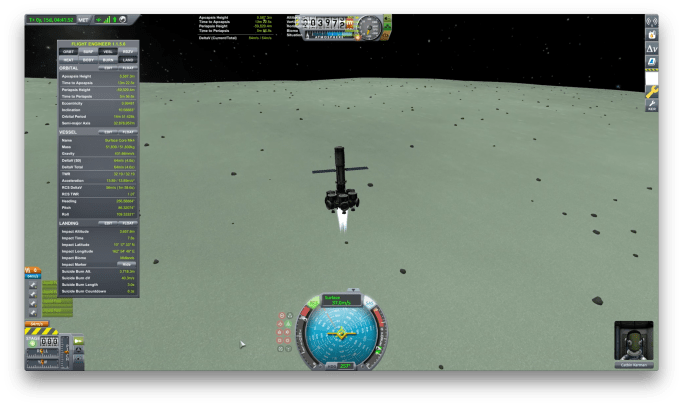
Welcome to Kerbalism! I’m your host, Aubrey Goodman. In this episode, we build a manned station on the surface of a small moon using a construction core.

In our series on asteroid mining, we used unmanned probes with mining equipment to extract and process resources from nearby asteroids. We converted them into fuel and metal, the raw materials required to expand the capabilities of an orbital construction platform. Now we must accumulate enough rocket parts to begin building our construction core.

The core itself has an empty mass of about 20 tons, so we’ll need at least 20 tons worth of asteroid just to provide the bare minimum mass. In KSP, there is no waste from the refining process. In reality, this would involve a consideration for waste management. For our purposes, we’ll simply define our threshold as double the empty mass to be safe.

Turns out we need more than we had available in our captured asteroid, so we need to capture another one. After a bit of patience, we find a viable target and proceed with intercept. This time, we find one much larger, so it will be sufficient for this mission and hopefully others. Our patience pays off! We’re fortunate to secure a huge rock with over 2500 tons of viable resources.

Now, we ferry ore back and forth between our harvester and our construction platform, while the processing equipment churns the ore into rocket parts. After many ferry trips, we have enough raw materials, and construction begins.

While the core is being built, we change the focus of the ore processing equipment. We must convert enough fuel to enable the core to execute the transfer orbit maneuvers and land safely. The core has just enough fuel reserves to make the entire trip from planetary orbit to landing. Once we land, we will be able to make as much fuel as we want.

Also, we need to identify an ideal landing zone, where resources are abundant. We do this using a resource surveyor in polar orbit around Minmus. The surveyor satellite provides a map of ideal landing locations. We select a viable equatorial candidate and begin the landing sequence.

Our station does not have landing gear. Instead, it has heavy pads for its base, so we need to set it down very gently on a flat surface. We selected a landing zone in a flat equatorial region with sufficient resource abundance to support our needs. In our next episode, we begin to expand the capabilities of our surface station to support fuel harvesting on a larger scale.

Thanks for watching Kerbalism!

Asteroids Part 3, Orbital Fuel Infrastructure

Vimeo: https://vimeo.com/313035570

YouTube: https://youtu.be/s0joNt7b0D8

Welcome to Kerbalism! I’m your host, Aubrey Goodman. In this episode, we build our first ship in space using resources collected from asteroids.

Building things in space isn’t much different from building on the planet’s surface. The laws of physics are the same, and delta-v calculations rely purely on thrust, mass, and fuel. The main reason we build in space instead of on the planet is the cost of sending things into orbit. Every craft we build must use a minimum delta-v to launch into orbit. This means we need exponentially larger launch vehicles for larger payloads. If we build in orbit, we only need to build the payload.

This means our spacecraft designs can now focus on optimizing for mission requirements. It also means we are no longer constrained by the aerodynamic environment. With the exception of atmospheric surface landers or gas giant surveyors, our designs need not take drag forces into consideration, since they will always be in space.

First, let’s look at one of our most important vehicles – the ore tug. This craft will ferry ore between the asteroid harvester and an orbital construction platform. It will need enough fuel reserves to perform the transfer orbital maneuvers required to move between the harvester and construction platform. It needs to account for a full ore storage tank in one direction and an empty tank in the other. This way, we don’t over design and bring more fuel than we need.

Next, let’s consider the construction platform itself. The platform is assembled in space, just like the other stations. We launch various components in phases, starting with a core and adding empty storage containers and fuel tanks. Since we will be building things using raw materials, we will need containers for those materials. The size of our containers will be the limiting factor preventing us from building beyond a maximum mass. We need the materials on-hand to build our craft.

With our fully operational station, we can begin to ferry ore from the asteroid. Here, we use some KSP addons to approximate the logistics of manufacturing. Ore is processed into metal and fuel. Metal is subsequently processed into rocket parts, which we use to assemble our spacecraft.

After we have processed and prepared our resources, we begin construction of our first spacecraft. We’re going to build onto our existing station first to expand its existing capabilities before we start building other things as well. Then we’ll build a construction core, with all the capabilities of our orbital platform.

In our next episode, we land our construction core on Minmus and use it to begin building other components.

Thanks for watching Kerbalism!

Asteroids Part 2, Capture and Harvest

Vimeo: https://vimeo.com/311723008

YouTube: https://youtu.be/628eqhhpV5s

Welcome to Kerbalism! I’m your host, Aubrey Goodman. In this episode, we harvest resources from an asteroid and use them to capture the asteroid in orbit.

In our last episode, we intercepted an asteroid and grabbed onto it. We still need to slow it down in order to capture it into planetary orbit. If we don’t slow down, our harvester will be swept out of the planet’s sphere of influence to solar orbit along with the asteroid. Since the whole point is to use the resources within the asteroid, we need a retrograde burn with the asteroid in tow.

We’ve used most of the fuel to position our harvester. If we’re lucky, we might have some fuel to slow down, but there’s a good chance we’ll need to do a little harvesting before we can perform the maneuver.

This is where we begin to encounter the boundaries of what KSP can do. As sophisticated as it is, the unmodified game supports only one form of resource processing – fuel. We can convert ore into various fuels, but we can’t make metal or rocket parts to build directly in space. There are addons to enable this, and we’ll use them in the next episode.

This is also where we surpass the real world capability. The game allows players to grapple an asteroid and extend drills, all with the click of a button. Clearly, we don’t yet have this level of technology available in the real world.

The reason we use a harvester to capture our asteroid is simple. It would be expensive to bring enough fuel to slow down the asteroid, so we bring harvesting equipment along and use it to make fuel after we arrive. By carrying fuel processing components, we can plan to use most of our fuel to intercept and attach to the asteroid. Then, we can mine resources and process them into fuel to fill our tanks before the return trip.

With adequate fuel in our tanks, we perform a retrograde maneuver to settle into stable planetary orbit. The final altitude of our asteroid’s orbit will affect our orbital fuel harvesting operations, so it’s important to consider the details.

If the asteroid inclination is high, we will need extra fuel to ferry ore between the harvester and the processing facility. However, the asteroid itself is massive, so we would need a lot of fuel to move it to a different orbit. In our example, we settle into a circular orbit around the planet, between our two moons, but in a highly inclined orbit.

With an asteroid in stable orbit around the planet, we can begin to use its resources. In our next episode, we refine these resources into metal and rocket parts to build spacecraft directly in orbit. Don’t miss it!

And thanks for watching Kerbalism!